Find a Branch

SBA Loans at NexTier Bank: Preferred 7(a) and 504 Lender

Federally guaranteed small-business lending, underwritten and closed in Butler County. NexTier Bank is a Preferred SBA lender, which means delegated authority to approve 7(a) and SBA Express loans in-house. Practical effect for a Western Pennsylvania operator: roughly eight weeks from application to funding on a standard 7(a), versus fourteen-plus weeks at a non-preferred lender.

The full SBA tool kit is on the shelf — 7(a) for general business purposes up to $5M, 504 for owner-occupied real estate and major equipment, Express for faster revolving and term facilities up to $500K, and CAPLines for specialised working-capital needs. Commercial line: 724-287-8781 extension 1200.

Start an SBA Conversation SBA 504 for CRE
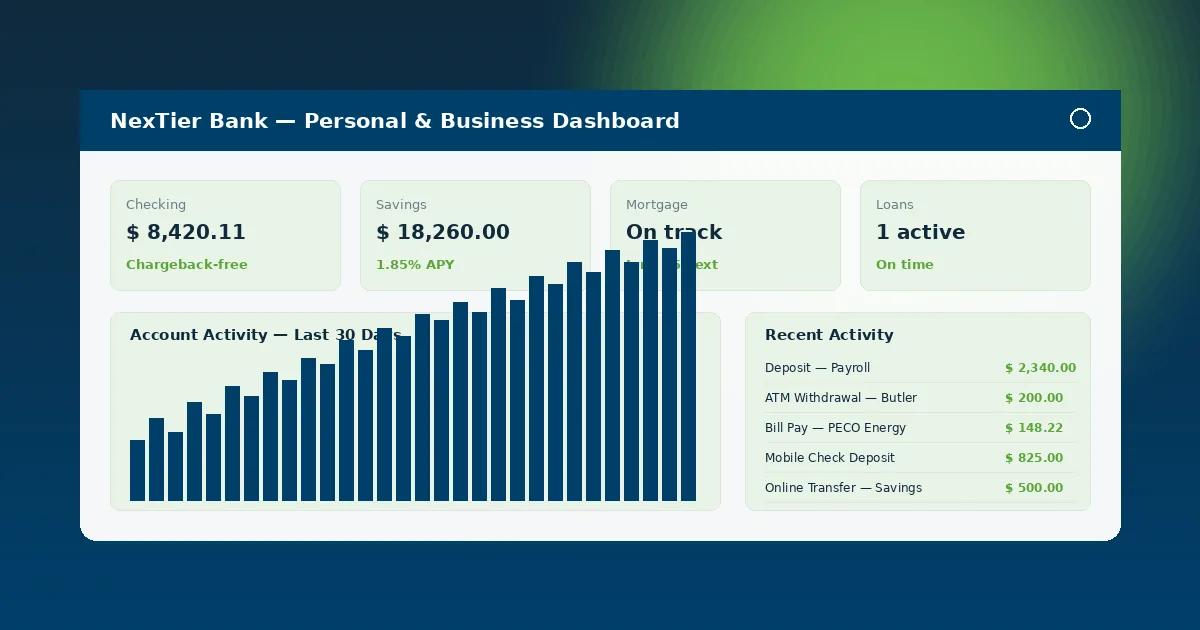
NexTier Bank SBA loan dashboard showing 7(a) application progress, 504 CDC debenture, SBA Express revolver and CAPLine borrowing base

SBA Lending Reference: Four Programs Mapped to Real Use Cases

Each SBA program fits a different purpose. A 30-minute conversation with the commercial SBA team maps eligibility, sizing and expected timeline.

SBA 7(a) Up to $5M

The flagship general-purpose SBA program. Funds real estate acquisition or refinance, equipment, working capital, business acquisition, partner buy-outs and leasehold improvements. Single lender, single closing. SBA guaranty 75-85% depending on loan size. Preferred-Lender underwriting means in-house decisions. Maximum term varies by use — up to 25 years on real estate, 10 years on equipment, 7-10 on working capital.

SBA 504 for Real Estate & Equipment

Two-loan structure: bank first-mortgage at ~50% of project, CDC second-mortgage at ~40% SBA-guaranteed debenture (long-term fixed rate), borrower contributes ~10%. Purpose-restricted to owner-occupied real estate and major equipment. The low down payment and long-term fixed rate on the 504 piece are hard to beat for fixed-asset financing.

SBA Express Up to $500K

Streamlined 7(a) sub-program. Faster SBA processing and reduced documentation. SBA guaranty drops to 50%, but turnaround improves significantly. Express lines can be revolving — a feature standard 7(a) does not offer. Best for established operators needing working-capital flexibility up to $500K or smaller equipment purchases.

SBA CAPLines (Revolving)

Four CAPLines categories under the 7(a) umbrella: Seasonal for predictable seasonal cycles; Contract for specific performance contracts; Builders for construction-for-resale; Working Capital for general short-term revolver needs. Each has eligibility specifics. The Butler commercial team sizes the right category against the actual cash-flow pattern.

Program Comparison Table

Size caps, term ranges, down-payment expectations and best-fit scenarios across the SBA product set.

ProgramMax AmountTermDown PaymentBest For
SBA 7(a) Standard$5,000,000Up to 25 years (real estate)10% typicalGeneral business, acquisitions, CRE, working capital
SBA 7(a) Small Loan$500,0007-25 years10% typicalSmaller established operators
SBA 504$5,500,000 (debenture)10, 20 or 25 years fixed10% typical (15% for start-ups)Owner-occupied CRE and heavy equipment
SBA Express$500,000Up to 10 years or revolving10% typicalFast decisions, smaller working capital
SBA CAPLines Seasonal$5,000,000Annual, revolvingNegotiatedSeasonal contractors, retailers
SBA CAPLines Builders$5,000,000Per-projectNegotiatedConstruction-for-resale contractors

Preferred Lender Speed Matters

Time-to-funding advantage compounds across every SBA deal the bank closes.

~8 wkTypical preferred 7(a) close
14+ wkNon-preferred lender timeline
$5MMax SBA 7(a) amount
10%Typical SBA 504 down payment

Three SBA Deal Patterns We See Every Month

Specific Western Pennsylvania examples of how an SBA structure outperforms a conventional alternative for the same operator.

Acquisition Financing via SBA 7(a)

A Kittanning-area operator is acquiring a small HVAC company for $1.4M — $900K goodwill, $300K equipment, $200K working capital. A conventional structure would require 30-40% down. SBA 7(a) lets the acquirer put 10% down, amortise over 10 years, and ride a seller note on 10% more. Preferred-lender status closes in ~8 weeks. The acquirer preserves cash to actually operate the business post-close.

Eligibility follows current SBA size standards published at SBA size standards. The commercial team pre-qualifies the operator and the target against those standards before committing to a term sheet.
SBA 7(a) acquisition financing structure with 10% down payment, seller note and 10-year amortisation
SBA 504 structure with bank first-mortgage, CDC debenture and 10% borrower equity for owner-occupied real estate

Owner-Occupied CRE via SBA 504

A Butler County manufacturer buying a $2.5M production building goes SBA 504. The bank originates a $1.25M first-mortgage at conventional terms. The CDC originates a $1M 504 debenture at a long-term fixed rate. The manufacturer puts 10% down — $250K — preserving a million-plus in working capital that would otherwise land on the closing table. 20-year fixed on the CDC piece provides payment predictability across the full amortisation.

Refer to the companion commercial real estate page for appraisal and environmental review detail. Program eligibility requirements are documented on the SBA 504 program page.

Seasonal CAPLine for a Landscape Contractor

An Armstrong County landscape and snow-removal contractor runs heavy revenue March through October, then goes quiet through winter. Conventional working-capital lines struggle with the swing. An SBA CAPLines Seasonal facility aligns the revolver to the actual cycle — advances accelerate in spring to fund payroll and materials, paydown in summer, re-draw for snow equipment in fall. Facility renews annually with fresh tax returns and a six-month interim statement.

CAPLines is a 7(a) sub-program; pricing and fees follow the broader 7(a) schedule. The bank handles all SBA reporting on the operator's behalf.

SBA CAPLines Seasonal facility aligned to landscape contractor spring-to-fall cash flow cycle with snow-removal winter draws

Related Services at NexTier Bank

SBA loans rarely stand alone — most SBA borrowers hold a full operating stack at the same bank.

Business Banking Companions

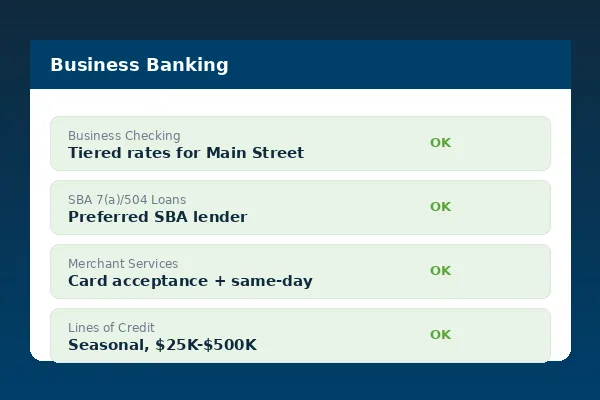
Business checking, business savings, conventional business loans, commercial real estate and merchant services complete the relationship.

Personal Banking for Owners

Personal guarantors often consolidate personal checking, personal savings, mortgages and auto loans at the same bank for simpler financial statements.

Digital Tools

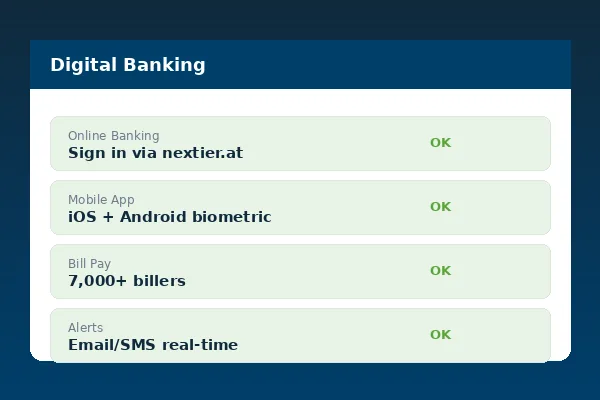
SBA loan payments, statements and covenant reporting run through online banking, mobile banking, alerts and eStatements.

Start an SBA Pre-Qualification

Bring three years of business tax returns, current interim financials, a personal financial statement and a description of the use of funds. The SBA team runs a pre-qualification against size standards and ownership eligibility. Call 1-800-262-8215 or 724-287-8781 ext. 1200.

Find a Branch

People Also Ask

What does Preferred SBA Lender status actually mean?
Delegated authority to underwrite, approve and close SBA 7(a) and Express loans in-house without SBA pre-review. Practical effect: ~8 weeks to fund a preferred 7(a) versus 14+ at non-preferred.
What is the difference between SBA 7(a) and SBA 504?
7(a): single lender, flexible use, up to $5M. 504: two-loan bank + CDC structure, real estate / major equipment only, lower down payment and long-term fixed rate on the 40% debenture piece.
What is SBA Express?
Streamlined 7(a) sub-program up to $500K. 50% guaranty (lower than standard 7(a)). Faster processing. Can be revolving — unusual feature for an SBA product.
What are SBA CAPLines used for?
Four categories of revolving 7(a) lines: Seasonal, Contract, Builders and Working Capital. Structured around specific working-capital patterns.
What do SBA loans cost in fees?
SBA guaranty fee scales with size and term (0% to ~3.5% on larger loans). Total cost of capital is usually lower than conventional alternatives because of longer amortisation and smaller down payment.

Community Banking Resources — Topic Cluster