Find a Branch

Commercial Real Estate at NexTier Bank: CRE Lending for Western Pennsylvania

A community-bank CRE team headquartered in Butler County, underwriting Western Pennsylvania real estate the way it should be underwritten — with an appraiser who knows the submarket and a banker who has walked the block. NexTier Bank finances owner-occupied industrial, investment property, construction-to-permanent projects, multifamily and mixed-use across Butler, Armstrong, Westmoreland and surrounding counties.

Decisions are made locally, not routed through a regional centre. Appraisals are ordered from Western PA appraisers who deliver usable comps and realistic market-rent opinions. Commercial line: 724-287-8781 extension 1200.

Talk to the CRE Team SBA 504 for Real Estate
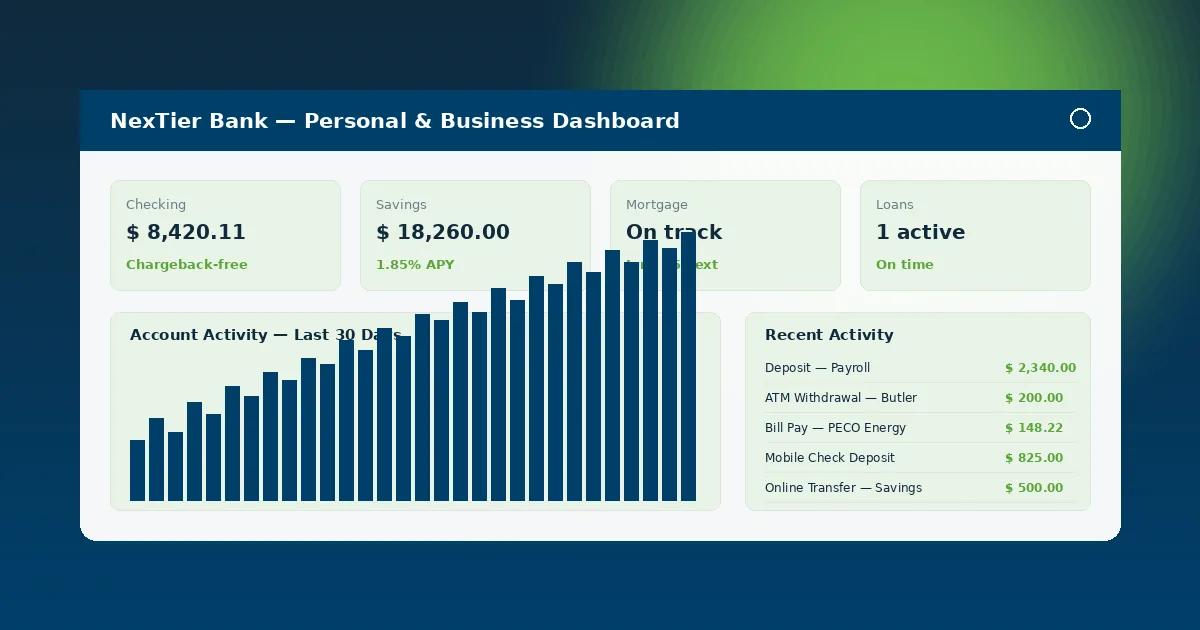
NexTier Bank commercial real estate dashboard with owner-occupied industrial property, multifamily rent roll, DSCR analysis and draw schedule

Commercial Real Estate Snapshot: Five CRE Products for Western PA

Each product is structured around a different collateral profile. A 20-minute conversation with the CRE team points to the right one.

Owner-Occupied CRE

$100,000 to $5,000,000 for businesses occupying 51%+ of the subject property. Underwriting combines business operating cash flow with property income. Typical 20-to-25-year amortisation with a 5-to-10 year balloon or call. Fixed-rate at closing or variable over SOFR. Often paired with SBA 504 for enhanced terms.

Investment Property CRE

Office, retail, industrial, single-tenant and multi-tenant investment properties. Underwriting weights property NOI, rent-roll stability and DSCR at 1.25x-1.35x minimum. Rent-roll stress testing applied on tenant rollover risk. 20-to-25-year amortisation typical with a 5-year balloon.

Construction-to-Permanent Commercial

One closing. Interest-only draws during construction, automatic conversion to amortising permanent financing at completion. AIA-format draw requests with third-party inspector sign-off. Used for ground-up build, major rehab, tenant build-out and owner-occupied expansions. Removes the risk of shopping permanent mid-project.

Multifamily 2-50 Unit

Small-cap and mid-sized multifamily properties across Western PA. Underwriting uses rent-roll, T-12 operating statement and local appraisal. Reserve requirements scale with unit count. Properties above 20 units typically include capital-reserve escrow. Construction-to-permanent available for ground-up multifamily.

Mixed-Use Properties

First-floor retail with apartments above, or office-over-warehouse configurations common in Butler, Kittanning, Freeport and Ford City main-street corridors. Underwriting blends commercial and residential cash-flow analysis. Zoning verification and insurance coverage appropriate to mixed-use are part of the closing checklist.

Local Appraisal & Environmental

Every CRE file orders a local Pennsylvania-licensed appraisal. Environmental screening follows Phase I / Phase II protocol for suspect sites. Flood determination is pulled. All third-party reports reviewed by the commercial credit team in-house, not outsourced to a national review shop.

Property-Type Underwriting Table

LTV ceilings, maximum term structures, amortisation and recourse expectations across the core CRE product set.

Property TypeMin LTVMax TermAmortisationRecourse
Owner-Occupied IndustrialUp to 80% LTV10-year balloon25 yearsFull recourse
Owner-Occupied Office / RetailUp to 75% LTV10-year balloon20-25 yearsFull recourse
Investment Office / RetailUp to 70% LTV5-year balloon20-25 yearsFull or partial recourse
Multifamily 2-20 UnitUp to 75% LTV5-10 year balloon25 yearsFull recourse typical
Multifamily 21-50 UnitUp to 70% LTV5-year balloon25 yearsNegotiated partial
Mixed-UseUp to 70% LTV5-10 year balloon20-25 yearsFull recourse

Local Context Is a Real Underwriting Advantage

A Butler County credit team reads Western PA submarkets differently than a regional shop ever could.

ButlerCRE credit team based in Butler County
1.25xTypical minimum DSCR
30-45Days typical close for simple files
LocalAppraisers who know submarket comps

How CRE Deals Actually Get Closed Here

Three real-world scenarios that show what local underwriting looks like when it matters.

Owner-Occupied Machine Shop Acquisition

A Butler-area fabricator wants to buy a 28,000 sq ft industrial building currently leased. Acquisition price $1.8M. The file underwrites on combined cash flow — the operating business generates $420K EBITDA, the property at purchase will generate enough sublease income from a retained tenant for DSCR above 1.30x. 25-year amortisation, 10-year balloon, fixed-rate at closing. Paired with an SBA 504 second-position participation for lower down payment.

Regulatory framework follows Federal Reserve CRE supervisory guidance on concentration limits, appraisal independence and stress testing.
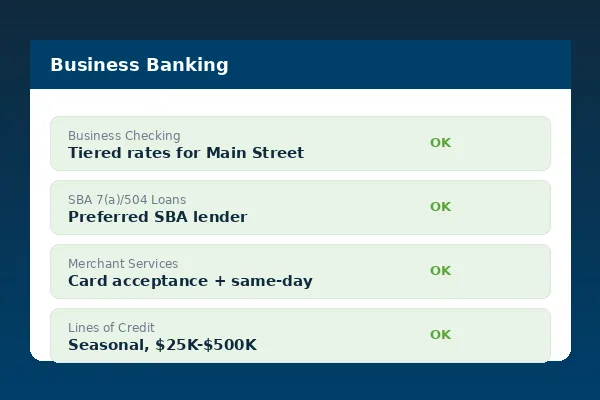
Owner-occupied industrial machine shop acquisition with blended DSCR underwriting across business and property
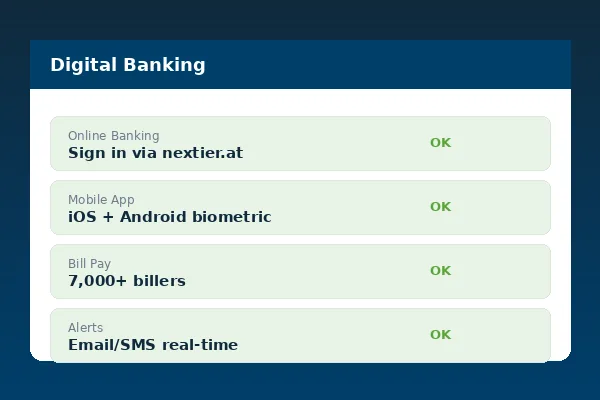
Multifamily rent roll analysis with occupancy history, T-12 NOI and DSCR stress test at 1.25x

Multifamily Investor Laddering Properties

A Western PA investor owns three multifamily buildings totalling 42 units. The fourth acquisition is a 14-unit brick building in Kittanning. Appraisal comes in at $1.35M. Rent roll supports a 1.28x DSCR at 70% LTV, 25-year amortisation, 5-year balloon. Cross-collateralisation not required. The investor retains full control of lease-up and capex decisions within the covenants.

FDIC safety-and-soundness expectations on CRE concentration ratios and internal stress testing are documented on the FDIC supervision resources.

Construction-to-Permanent Medical Build-Out

A family medical practice is building a 6,200 sq ft owner-occupied clinic on a pad site near Saxonburg. Total project $1.75M. Construction-to-permanent closes once, interest-only during the 10-month build period, automatic roll to 20-year amortisation at completion. Monthly AIA draws from general contractor, third-party inspector signs off each draw, permits verified, lien waivers collected.

Local appraiser delivers a prospective-market-value-at-completion appraisal using comparable medical properties in Pittsburgh submarkets. Structure keeps the practice from interrupting patient care to re-qualify mid-project.

Construction-to-permanent CRE loan with AIA draw schedule, inspector sign-off and automatic conversion to permanent amortisation

Related Services at NexTier Bank

CRE sits at the centre of a broader commercial relationship.

Business Banking Companions

Business checking, business savings, business loans, merchant services and SBA 504 / 7(a) complete the relationship.

Personal Banking for Owners

Owners often hold personal checking, mortgages, money market and CDs at the same bank, simplifying financial-statement reporting for CRE covenants.

Digital Reporting

Online banking, mobile banking, alerts, eStatements and wire transfers carry loan payments and covenant-report submissions.

Start a CRE Conversation

Bring a purchase contract or subject address, two years of business tax returns if owner-occupied, rent roll and T-12 if investment, and a personal financial statement. Call 1-800-262-8215 or 724-287-8781 extension 1200.

Find a Branch

People Also Ask

What is the difference between owner-occupied and investment CRE?
Owner-occupied: operating business occupies 51%+ of the property. Investment: rented to third-party tenants. Underwriting weights differ — owner-occupied leans on business cash flow, investment leans on property NOI.
What DSCR does NexTier Bank require?
Typically 1.20x-1.35x depending on property type, tenancy mix and LTV. Owner-occupied with strong business cash flow can underwrite on blended DSCR. Multifamily minimum typically 1.25x.
Do you lend on construction-to-permanent?
Yes. Interest-only draws during construction, automatic roll to permanent amortising financing. One closing. AIA draw format with third-party inspector sign-off.
What multifamily sizes do you finance?
2-unit to 50-unit across Western PA. Small-cap below $500K closes fast with rent-roll and local appraisal. Larger units include reserve requirements.
How long does CRE underwriting take?
Simple owner-occupied / small multifamily: 30-45 days. Investment CRE with tenancy complexity, environmental and legal review: 45-75 days.

Community Banking Resources — Topic Cluster